
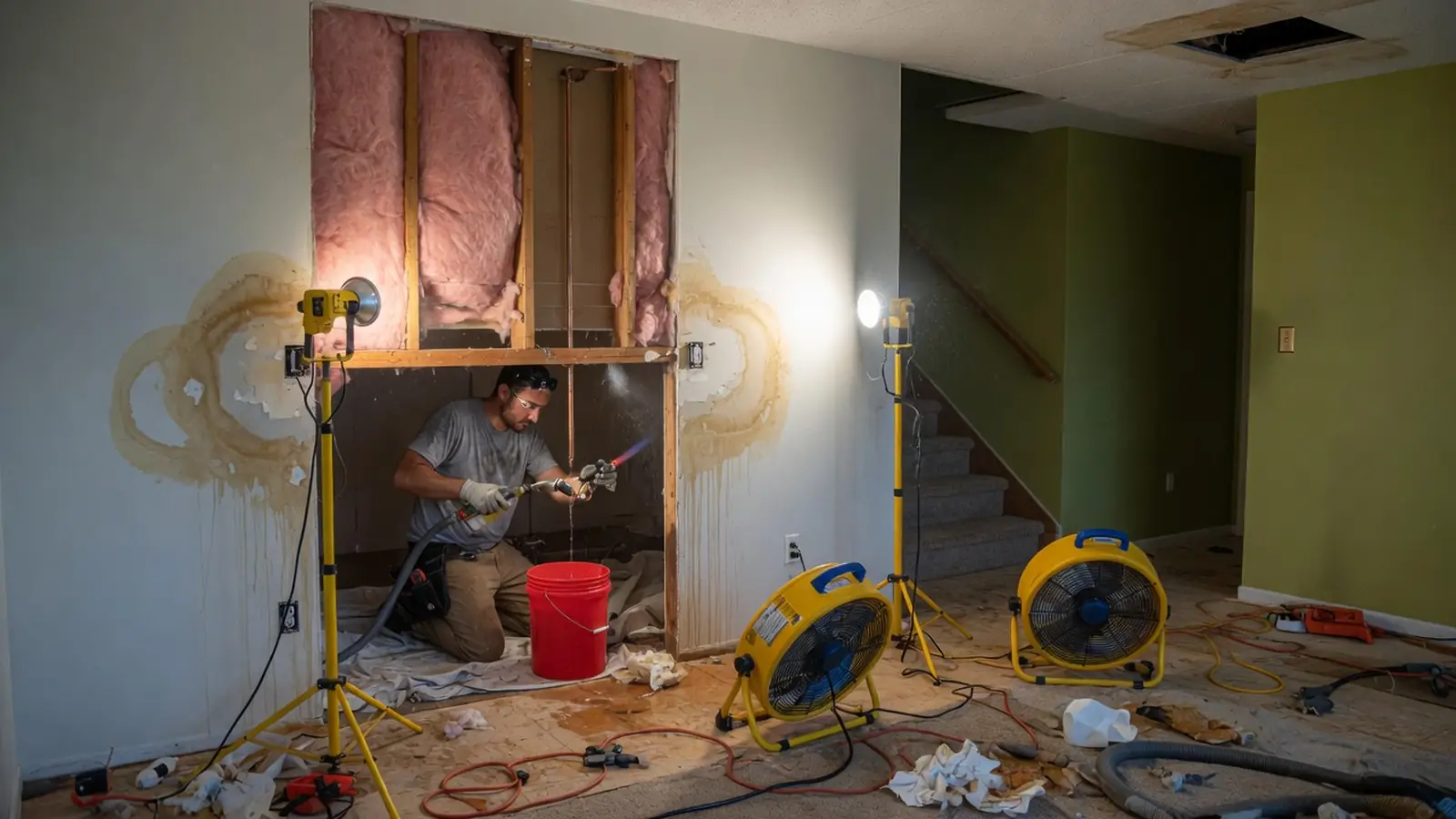
Topeka Storm Damage
Severe thunderstorms and flash downpours can breach building envelopes and inundate properties in minutes. Public emergency logs show that heavy rainfall concentrated in short periods triggers rapid overnight basement inundation, with emergency calls spiking as early as 3:30 AM. Our emergency crew stabilizes residential structures immediately with high-volume pumping and certified moisture controls.
If sewage is already in the house, keep people and pets away from it and call (785) 555-0154.
Restoring Structural Integrity After Severe Weather
Severe regional weather frequently causes sudden structural water intrusions across Shawnee County properties.
Hail activity across the county is uneven year to year: 2025 logged 546 radar signatures while 2022 logged only 320, a 1.7x spread.
Comparing the two halves of 2021-2025 in our region, radar hail signatures went from 664 to 1,011, representing a rise of 52%.
The median owner-occupied home locally was built in 1967 (Census ACS 5-year), creating roof decking and flashing vulnerabilities during microbursts.
When violent squalls strike, homeowners can rely on our 24/7 emergency water damage restoration crew to halt water migration immediately.
Our technicians prioritize moisture detection behind baseboards and within wall cavities to stop rot before it starts.
Our Step-By-Step Storm Response Protocol
Storm restoration crews must secure emergency roof tarping and board up broken fenestrations before beginning interior water extraction to halt ongoing rain intrusion. We focus on extracting standing basement flooding water and establishing structural containment immediately.
- Immediate Envelope Stabilization. Technicians board up shattered windows and install heavy-duty roof tarps to eliminate active weather infiltration into attic rafters and living spaces.
- Water Extraction And Debris Clearing. Industrial truck-mounted vacuum units remove pooled floodwaters while crews clear fallen tree limbs to prevent perimeter pooling.
- Moisture Mapping And Cavity Drying. Thermal imaging cameras track moisture paths beneath subfloors, guiding commercial dehumidifiers to stabilize structural lumber.
- Antimicrobial Treatment And Verification. EPA-registered sanitizers treat affected wall cavities before digital psychrometric logs confirm that all timbers have reached dry standard equilibrium.
Dedicated Workmanship And Transparent Recovery
Every project follows IICRC S500 standards for professional water damage mitigation, utilizing hospital-grade antimicrobials and calibrated drying equipment. We document daily relative humidity levels and coordinate directly with adjusters, integrating preventative mold remediation methods so your home remains safe and structurally sound without unexpected surprises.
Roof Tarping And Fenestration Board-Up
Emergency exterior weatherproofing seals breached shingles, siding, and broken windows against incoming squalls. This critical initial step protects interior insulation from active rain intrusion.
Basement Flood Water Extraction
High-capacity submersible pumps and commercial extractors clear heavy inundation caused by storm runoff. Rapid removal prevents foundation pressure buildup and stops timber framing from swelling.
Structural Dehumidification
Industrial desiccant and LGR dehumidifiers draw trapped moisture from wall studs, subfloors, and ceiling joists. Continuous psychrometric monitoring ensures framing reaches equilibrium drying standards.
Committed To Local Disaster Recovery
Our technicians maintain rapid deployment capabilities across every district, ensuring properties receive immediate emergency stabilization following major supercell storms.
- 15Zip Codes Served
- 8Service Areas
- 3Services Offered
Read verified feedback from local property owners who experienced our rapid storm damage stabilization and restoration services.
“Every evening before heading out, the crew swept our hallways, emptied the dehumidifier reservoirs, and neatly stacked all drying equipment out of our walkway. They made living in our house manageable even while dealing with soaked drywall from the gale-force rainstorm. Having our living space kept tidy overnight gave our family tremendous peace of mind.”
Marcus B.
“Detailed moisture readings and photo logs arrived on my phone every single morning by nine o'clock without me ever having to ask. The team kept our insurance adjuster in the loop continuously with zero phone tag or administrative delays. That transparent daily documentation made the entire storm recovery claim completely painless.”
Deanne K.
“Rather than pushing for full ceiling replacement right away, the crew tested our plaster and explained why targeted structural drying with high-grain desiccant units would preserve the original framing. Their honest assessment saved us thousands in unnecessary demolition while completely stabilizing the moisture levels. It was refreshing to work with technicians who genuinely prioritized preserving what was still sound.”
Garrett V.
“When secondary flash flooding blocked road access to our cul-de-sac, the team rerouted their utility vehicles and brought in portable extraction gear on foot to stay on schedule. They put in extra hours until midnight to ensure our basement was completely pumped out before subfloor delamination could start. Their dedication turned what could have been a total disaster into a controlled fix.”
Lorraine T.
Frequently Asked Questions
How quickly must tree limbs be removed and water extracted after a storm breach before structural timber begins swelling and weakening?
Crews should extract standing water and remove fallen branches within twenty-four to forty-eight hours before structural wood absorbs moisture. Lingering moisture causes subfloors and ceiling joists to warp, increasing overall structural repair costs significantly.
Does homeowner insurance cover storm-driven roof leaks and structural drying?
Storm-driven roof leaks leave homeowners uncertain about insurance coverage requirements for timely structural drying and mitigation. Most policies cover sudden weather perils but mandate that property owners take prompt action to prevent secondary water damage.
Why is water dripping through my ceiling during active downpours?
Unresolved roof leaks during active downpours cause water to drip through ceilings and spread moisture across walls and flooring. Water frequently travels along roof rafters before penetrating ceiling drywall, requiring professional thermal moisture tracking.
How do supercell storms damage attics without immediate ceiling stains?
Spring supercell storms in eastern Kansas frequently drive rain horizontally under eaves and gable vents, saturating attic insulation. Moisture can remain hidden inside the cellulose or fiberglass for days before watermarks appear on interior ceilings.
Why do emergency restoration waitlists occur after severe regional storms?
Local restoration providers typically max out at servicing 15 homes per day, creating unavoidable backlogs after major regional storms. Securing an early spot on the service schedule ensures your property receives immediate tarping and pumping before mold sets in.